
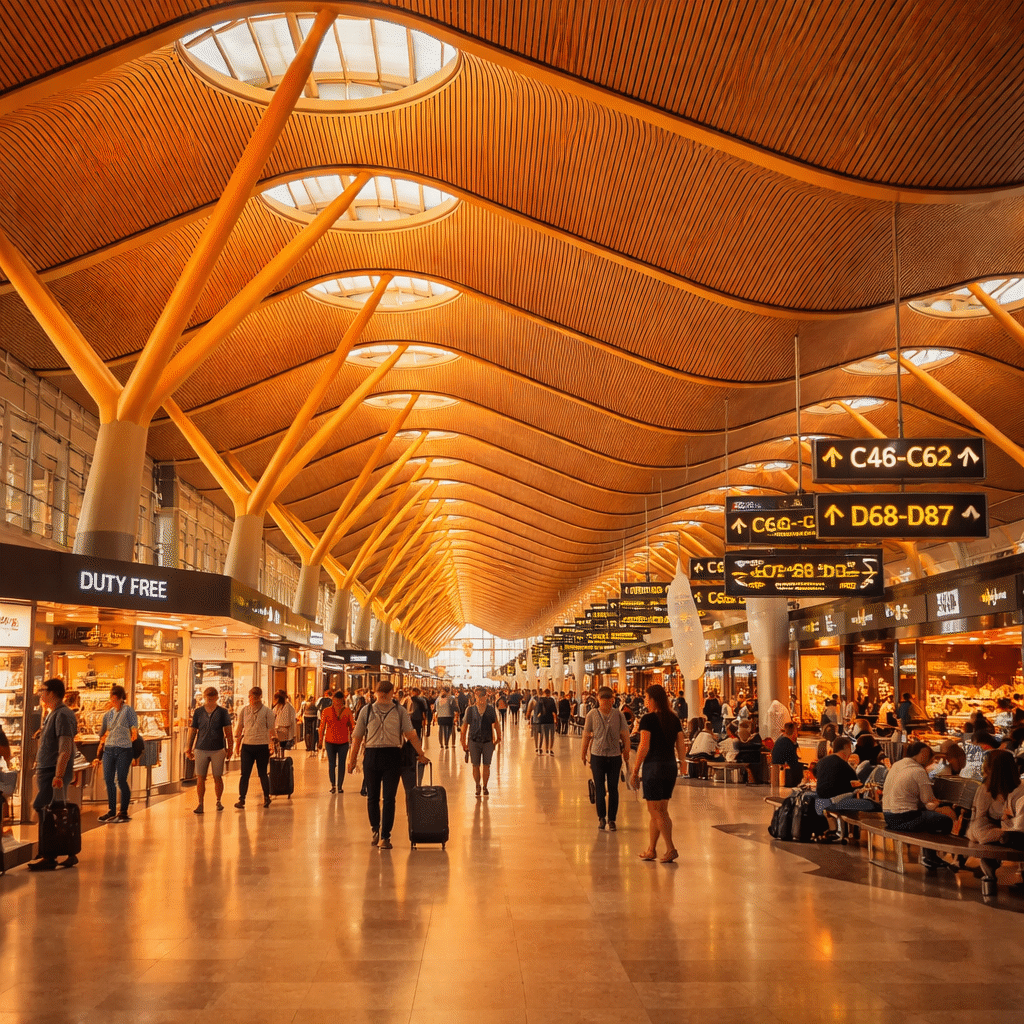
For nearly two decades, travelers have lived by the 100 ml / 3.4 oz liquid rule. Shampoo decanted into tiny bottles, water tossed at security, and plastic bags stuffed with toiletries became the norm.
Now, that rule is slowly starting to disappear — but only at select airports, and only if you know what to expect.
Here’s what’s changing, where it’s already happening, and what travelers need to watch out for.
🔍 Why the liquid rule is changing
Airports are rolling out next-generation CT (computed tomography) security scanners, similar to medical CT scans. These machines create 3D images of carry-on bags, allowing security to better detect explosives without relying on liquid limits.
Because of this technology, some airports now allow:
- Larger liquid containers (up to 2 liters in some cases)
- Liquids and electronics to stay inside your bag
- No plastic liquids bag at security
But this is not universal — and that’s where confusion starts.
🌍 Airports that already allow larger liquids (mainly Europe)
Several European airports have officially relaxed liquid rules at CT-equipped checkpoints.
🇮🇹 Italy
- Rome Fiumicino (FCO)
- Milan Linate (LIN)
- Milan Malpensa (MXP – selected terminals)
- Bologna (BLQ)
- Turin (TRN)
🇮🇪 Ireland
- Dublin (DUB)
- Shannon (SNN)
🇪🇸 Spain
- Barcelona (BCN – Terminal 1)
- Madrid (MAD)
🇨🇿 Czech Republic
- Prague (PRG – Terminal 2)
🇵🇱 Poland
- Kraków (KRK)
- Poznań (POZ)
- Lublin (LUZ)
🇩🇪 Germany
- Frankfurt (FRA – selected checkpoints)
🇩🇰 🇱🇹 Other
- Billund (BLL)
- Vilnius (VNO)
- Kaunas (KUN)
⚠️ Important: Even at these airports, not every security lane is upgraded. Rules may differ depending on which checkpoint you’re directed to.
🇬🇧 What about the UK?
UK airports like London City, Birmingham, Edinburgh, and Bristol installed CT scanners and briefly allowed larger liquids.
However, the UK government has temporarily reinstated the 100 ml rule nationwide, even at upgraded airports.
👉 Translation: assume 100 ml in the UK until officially told otherwise.
🇺🇸 What about liquids at U.S. airports?
For now, the rules in the United States have NOT officially changed.
The TSA still enforces the 3-1-1 rule, meaning liquids must be:
- In containers of 3.4 oz (100 ml) or less
- All fitting inside one quart-size bag
That said, many major U.S. airports (like ATL, JFK, LAX, ORD, and DFW) already use new CT scanners. These scanners mainly make security faster and allow electronics to stay in your bag — but they do NOT yet remove liquid size limits.
👉 Any flexibility you hear about in the U.S. is inconsistent and unofficial. One checkpoint might be relaxed, another won’t be — even at the same airport.
Bottom line:
If you’re flying from a U.S. airport, assume the 100 ml rule still applies unless TSA clearly states otherwise.
🧳 What’s always allowed (everywhere)
Regardless of scanners or country, these liquids are exempt:
- Baby formula and breast milk
- Medically necessary liquids
- Prescription medications
These must be declared at security, but size limits don’t apply.
✈️ The future
The liquid ban is clearly on its way out — just slowly, unevenly, and confusingly. Europe is leading the rollout, while the U.S. is still in the testing phase.
For now, knowing where the rules have changed is the only way to travel smarter.



Leave a Reply